|
Transit of Mercury, 11th November 2019This transit was observed from Chelmsford with an 80mm f11 refractor using projection on to a 6in (152mm) diameter disk. Observing conditions were not ideal before the transit with plenty of cloud. Luckily the Sun appeared just after 1st contact and stayed reasonabily clear until around 15:30 UT when the Sun was at an altitude of just 5 deg. The drawing below shows the position of Mercury at 10 minute intervals from 12:40 UT.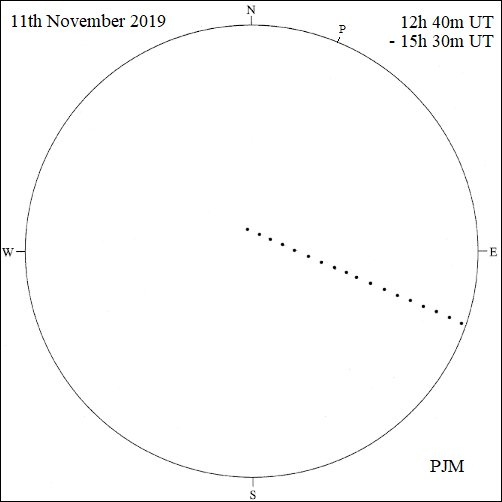
Transit of Mercury, 9th May 2016The transit was observed using telescopes set up by the Crete Astronomy Friends Club in the picturesque Venetian Harbour in Chania, Crete (see photo below). I observed the transit at around 15:50 UT (18:50 EEST, i.e. local time). Both the telescopes (on the same mount) used solar safety filters and showed that the Mercury was darker than the umbra of the few sunspots that were visible. The sky was slightly hazy as seen in the photograph.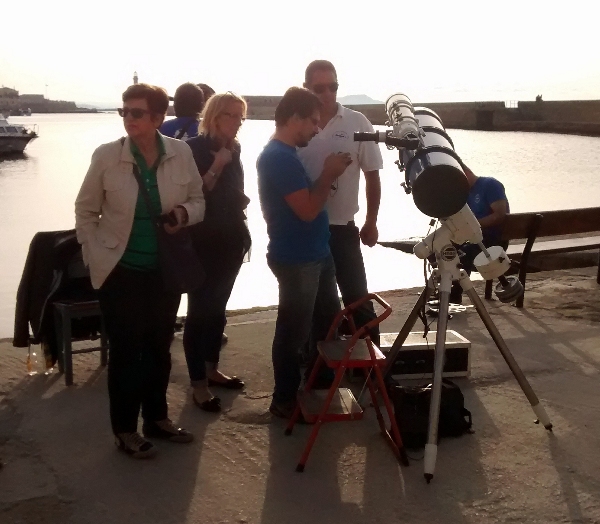
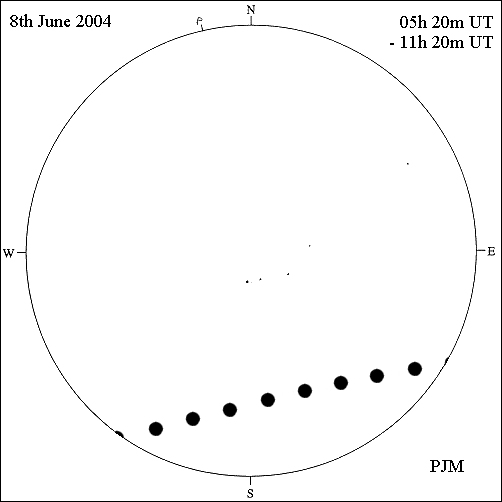
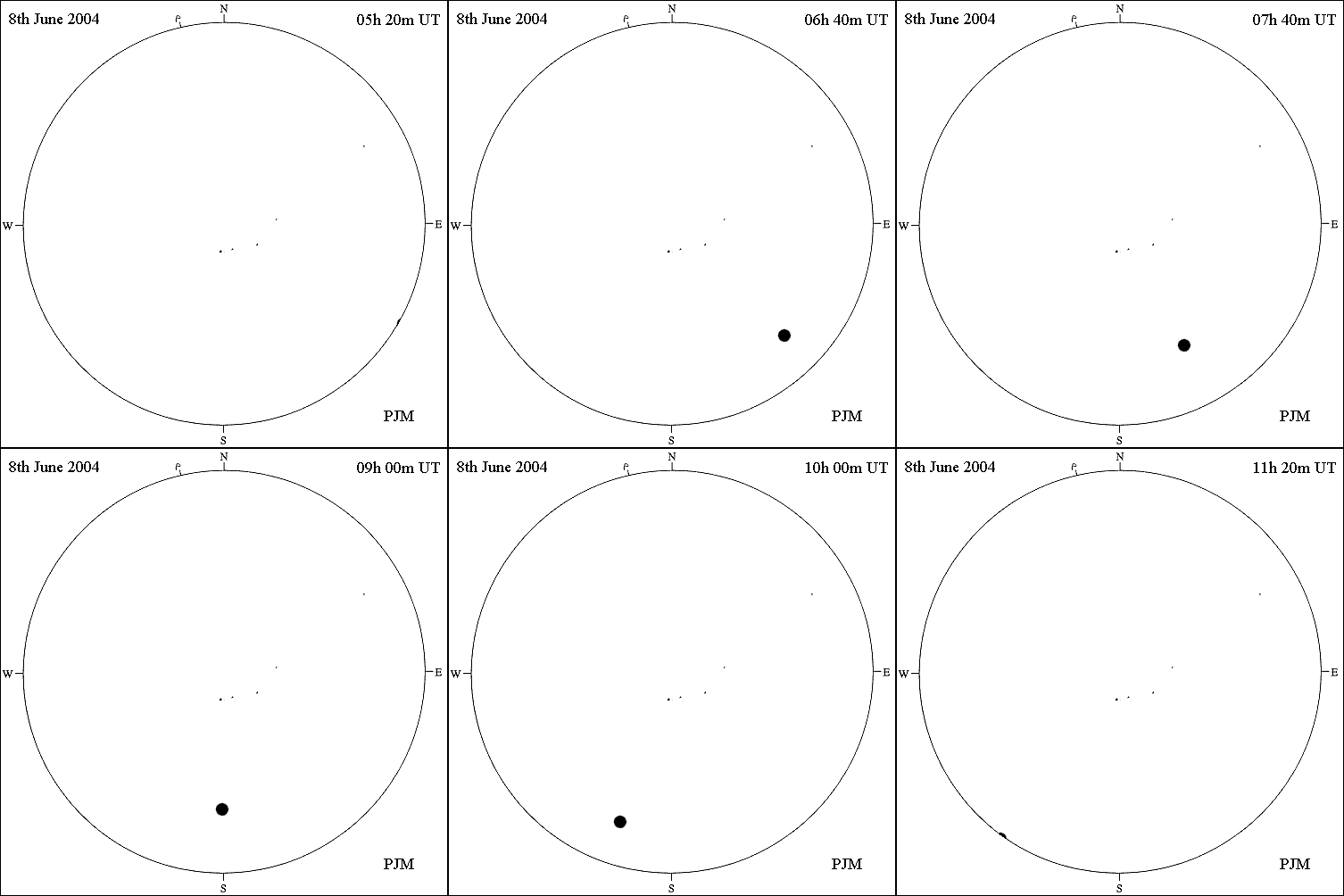
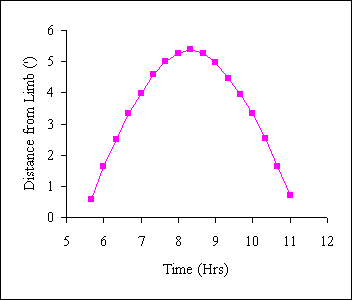
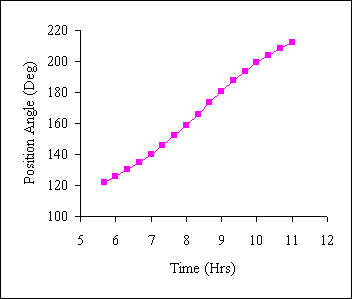
Transit of Venus, 8th June 2004The observing conditions on the morning of 8th June 2004 for the transit of Venus were very good with a clear sky (there was a little cirrus cloud at around 07h 00m) enabling the whole transit to be observed. First contact was estimated to be at 05h 19m UT and fourth contact at 11h 23m UT. At second and third contacts the black drop effect was seen briefly. Below is my disk drawing made using a 80mm f11 refractor using projection on to a 6in (152mm) diameter disk. The planet appeared as a sharp black circle on the solar disk. Also shown below are an animation made from the drawing, the distance of Venus from the solar limb and its position angle.
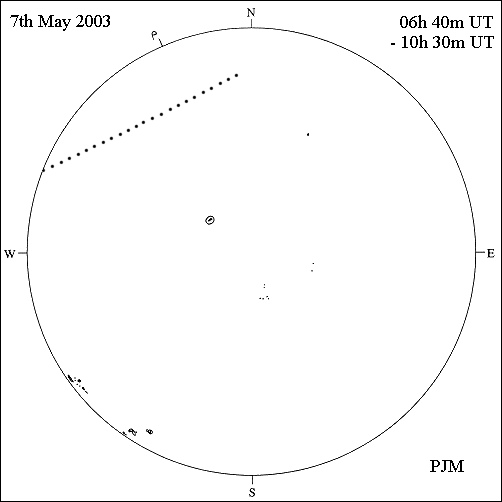
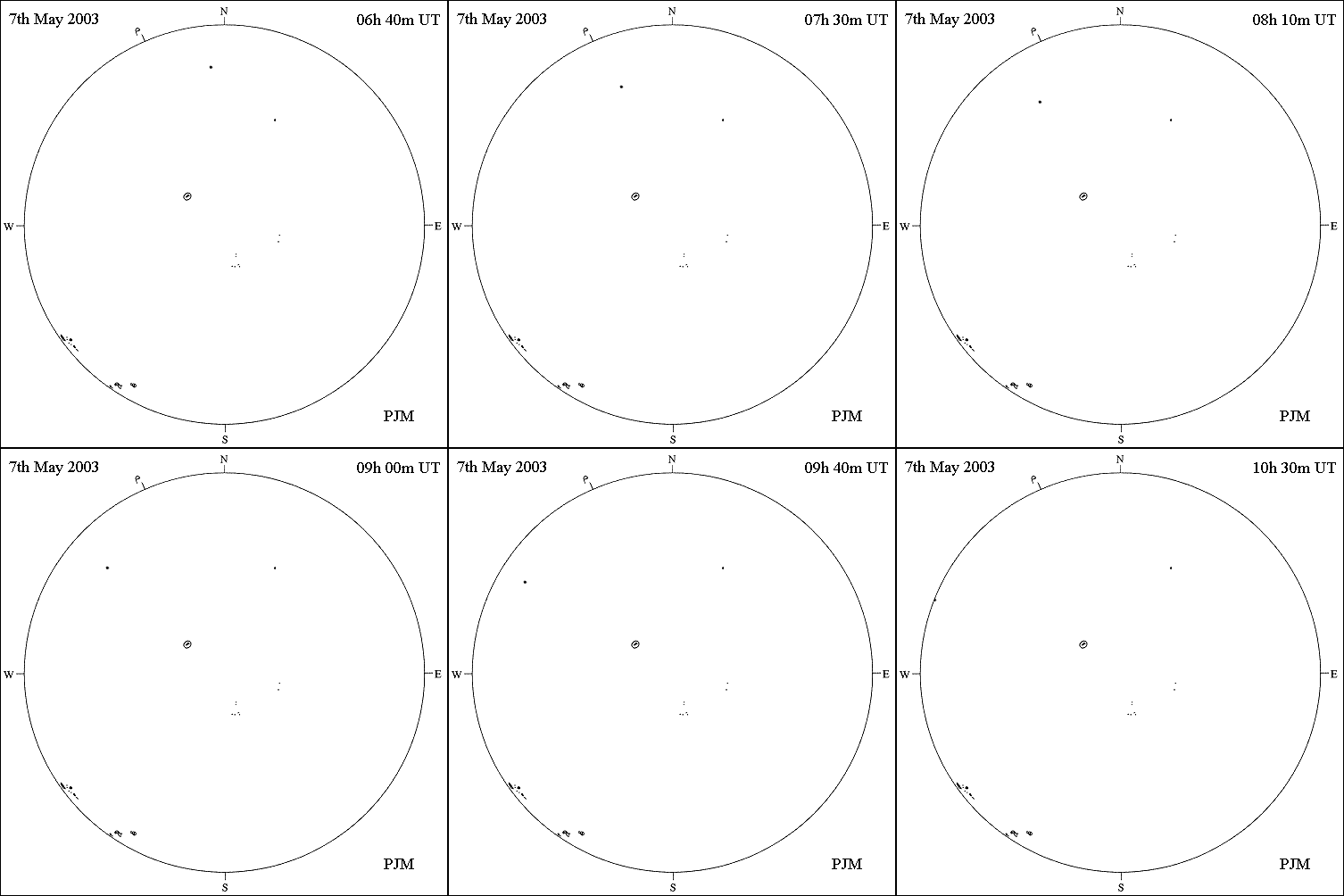
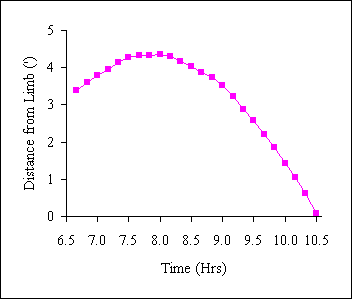
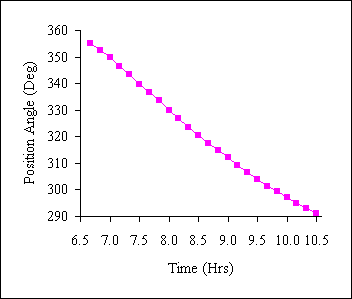
Transit of Mercury, 7th May 2003The observing conditions on the morning of 7th May 2003 for the transit of Mercury were good - a clear sky with some cirrus, hardly any wind and good seeing (solar granulation easily visible) until about 10h 00m UT when some turbulence was noticeable, especially on the solar limb. Below is my disk drawing made using a 80mm f11 refractor using projection on to a 6in (152mm) diameter disk. The planet appeared as a sharp black circle which was only slightly darker than the umbra in the unipolar sunspot towards the centre of the solar disk. Also shown below are an animation made from the drawing, the distance of Mercury from the solar limb and its position angle.
Last updated on 14 June 2004. |
||||||||||||||||||||||||||||||||||||||